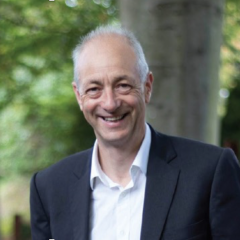
Willem Kuyken
PhD, DClinPsy
Ritblat Professor of Mindfulness and Psychological Science
- Principal Investigator, University of Oxford Mindfulness and Psychological Science Research Centre
A world without the devastating effects of depression, where people enjoy mental health and well-being across the lifespan and are resourced to meet the challenges of the 21st century.
My 2024 Book
 ©
Guilford Press
©
Guilford Press
Profile
Research focus
Depression is a global health crisis. Around one billion people are affected worldwide, most mental health difficulties begin in adolescence. Yet despite a multi-trillion dollar wellness industry, evidence-based approaches remain out of reach for most people who need them. In developed countries, only one in five people access effective treatment; in low- and middle-income countries, the figure is far lower.
My work addresses how we change this. Over more than twenty-five years, I have focused on developing and testing cognitive-behavioural and mindfulness-based approaches to treating and preventing depression — approaches with a robust evidence base. The answer I am pursuing draws on both ancient wisdom and modern psychological science. The goal is to develop approaches that are accessible, effective, and implementable across the lifespan — in individuals, families, schools, workplaces, and communities. A major challenge is scale: how do we make what works available? How do we meet people where they are. This includes moving "upstream," promoting mental health and resilience in young people, and using digital media and technology where they can be helpful.
A vision for 2050
A world free from the devastating effects of depression, where people can flourish, and are resourced to meet the challenges of the 21st century.
Public engagement
Science carries a responsibility: not only to generate knowledge, but to communicate it honestly and use it for the common good. I give keynotes and workshops for clinical, educational, and policy audiences internationally, and have engaged with parliamentary groups, the NHS, and national mindfulness associations. The academic papers have been reported in Nature, Scientific American, the Times Educational Supplement, and the Guardian.
Brief biography
My work has woven together many strands — my academic training as a scientist, my professional training as a clinical psychologist, my mindfulness practice over three decades, and my personal experience of recurrent depression.
I completed my PhD at the Institute of Psychiatry, King's College London, and trained as a clinical psychologist at the Salomons Clinical Psychology Training Programme. As a postdoctoral fellow at the Center for Cognitive Therapy, University of Pennsylvania and the Beck Institute, I spent two years learning cognitive-behavioural therapy mentored by Aaron T. Beck — an influence that has shaped everything I have done since.
From the mid-1990s, I deepened my understanding of mindfulness-based approaches through sustained practice and study: retreats and workshops in MBCT and MBSR, clinical supervision with John Teasdale and Trish Bartley, and practice support in the insight tradition from Christina Feldman and Catherine McGee. This training was never separate from my research — both were a form of exploration based in ethics and rigorous methods.
From 1999 to 2014, I was at the University of Exeter, where I led the clinical psychology doctoral training programme, headed the clinical research group, co-founded both the Mood Disorders Centre (with Ed Watkins) and the Masters in Mindfulness-Based Cognitive Therapies (with Alison Evans).
I have been at the University of Oxford since 2014, and Ritblat Professor of Mindfulness and Psychological Science since 2019.
I have supervised and mentored more than sixty graduate students, many of whom have gone on to productive careers in research, teaching, and the health service.
Declaration of Interest Statement
I am the Principal Investigator of the Mindfulness and Psychological Science Research Centre, a research group at the University of Oxford. From 2014 to 2022, I was responsible for the leadership of the Oxford Mindfulness Foundation charity. I was until 2015 an unpaid Director of the Mindfulness Network Community Interest Company. I receive royalties for several books on mindfulness and CBT published by Guilford Press. Since arriving in Oxford (2014) payments for training workshops and presentations have been donated to not-for-profit organisations aligned to my work, used to fund my research, or declined.I have advised and consulted various groups on an unpaid basis (evidence to the UK Mindfulness All Party Parliamentary Group).
My research has been supported by the National Institute for Health Research, Wellcome Trust, Economic and Social Research Council, NHS, Oxford Mindfulness Foundation, the Sir John Ritblat Family Foundation, the Daria and Dimitri Bukhman Foundation, Medical Research Council and British Academy.
The Ritblat Professor of Mindfulness and Psychological Science is a Chair endowed by the University of Oxford and the Sir John Ritblat Family Foundation.
Websites
-
WillemKuyken@GoogleScholar
Google Scholar profile
-
WillemKuyken@mindful.org
Publications on mindful.org
-
WillemKuyken@LinkedIn
LinkedIn profile
-
WillemKuyken@FaceBook
Facebook feed
-
WillemKuyken@YouTube
YouTube Channel
Recent publications
Mechanisms underpinning flourishing at the interface of humans and other natural entities: an umbrella review.
Other
Maloney S. et al, (2027), Lancet Planet Health
Ecological-collective-flourishing (e-co-flourishing): a framework to guide innovation and research
Other
Maloney S. et al, (2026), The Lancet Planetary Health, 101490 - 101490
Changes in hierarchical brain dynamics of rumination following mindfulness-based cognitive therapy for depression
Preprint
Dagnino PC. et al, (2026)
A digitally embedded intervention to enhance psychological decentering and reduce depression severity in at-risk adolescents: a randomised controlled trial of the 'One Step Back' programme.
Journal article
Knight R. et al, (2026), EClinicalMedicine, 96
Ecological, collective, flourishing (e-co-flourishing): A framework to guide innovation and research
Preprint
Maloney S. et al, (2026)
Mechanisms underpinning flourishing at the interface of humans and other natural entities: An umbrella review
Preprint
Maloney S. et al, (2026)
The Longitudinal Relationship Between Self-Reported Executive Function and Mental Health in Early Adolescence.
Journal article
Hinze V. et al, (2026), JAACAP Open, 4, 53 - 67
Mapping mental ill-health and health within a large, representative UK school-based sample of adolescents
Preprint
Bennett MP. et al, (2026)
Predicting Adolescent Response to School-Based Mindfulness: A Machine Learning Analysis in the MYRIAD trial
Preprint
Webb CA. et al, (2025)
Adolescents' trajectories of mental health in the MYRIAD trial.
Journal article
Holst CG. et al, (2025), JCPP Adv
My 2019 book with Christina Feldman

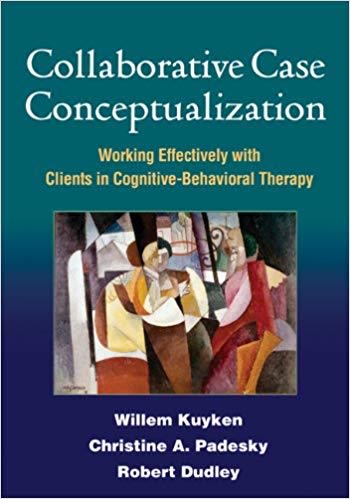
My 1999 book with Christine Padesky and Rob Dudley
Collaborators
-
Ruth Baer
Mindfulness Researcher, Teacher and Trainer - Professor Emeritus of Psychology, University of Kentucky
-
John Geddes
Professor of Psychiatry
-
Verena Hinze
Senior Postdoctoral Research Fellow
-
Liz Lord
MSt Tutor
-
Shannon Maloney
Postdoctoral Researcher
-
Jesus Montero Marin
Senior Researcher
-
Kearnan Myall
DPhil Student
-
Ilina Singh
Professor of Neuroscience & Society
-
Alan Stein
Emeritus Professor of Child and Adolescent Psychiatry